Join us
The Transport Systems and Logistics Laboratory welcomes applications from prospective PhD researchers, postdoctoral fellows and Imperial undergraduates.
PhD recruitment for 2027 entry
We are recruiting PhD candidates for our 2027 intake. If you wish to be considered in the first scholarship round, send your initial enquiry by Sunday 18 October 2026. Later enquiries will be considered for the next round, which closes in January 2027.
Our recruitment follows the scholarship rounds of the Department and the College, with more opportunities during March and June.
Please read the instructions carefully before contacting us. Review the application guidance and follow the steps in How to apply, including the required documents and email subject line.
Research areas
We welcome proposals in the following areas.
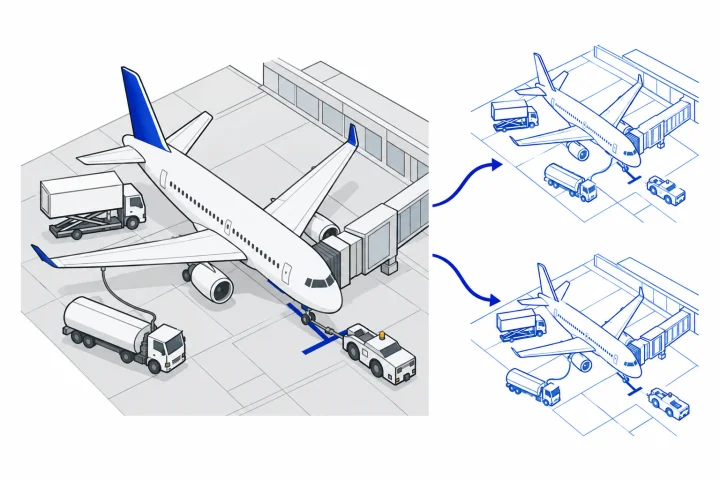
Cooperative control of vehicle fleets in mines, ports and airports.
Multi-agent reinforcement learning and related coordination methods for autonomous vehicles working in sites where routes and layouts change with the operation.

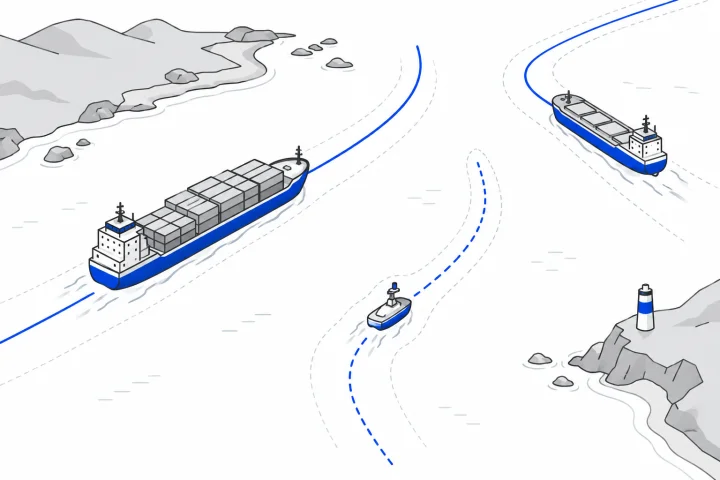
COLREG-compliant coordination of autonomous and conventional ships in challenging conditions.
Navigation methods for autonomous ships operating alongside crewed vessels in dense traffic, restricted visibility and heavy weather, with assessment of their compliance with the collision regulations (COLREGs) and navigational safety under uncertainty.
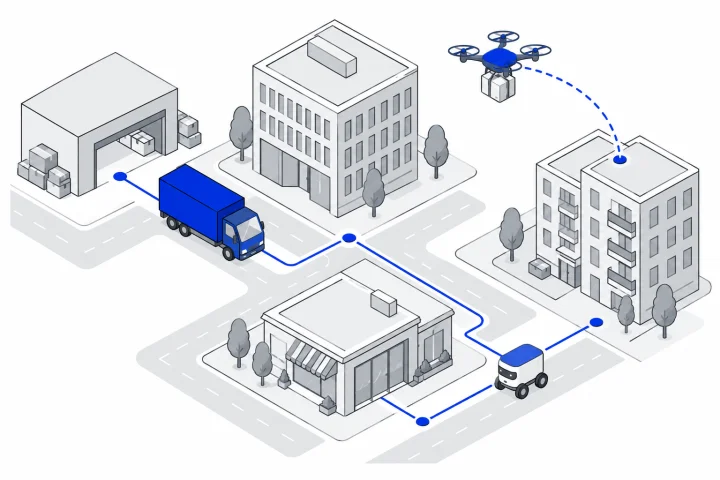
Learning-based optimisation and automated heuristic design for logistics.
Routing and scheduling methods that combine mathematical optimisation with learned models, and the use of language models for heuristic design, with applications that include coordinated deliveries by trucks, drones and robots.
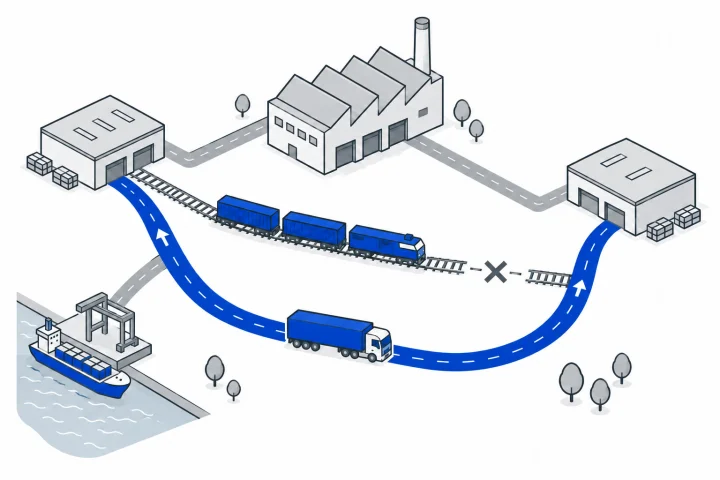
Resilience of shipping networks and supply chains.
Network and agent-based models of how disruption spreads through shipping networks and supply chains, how traders and operators respond, and which preparedness and recovery measures reduce losses.
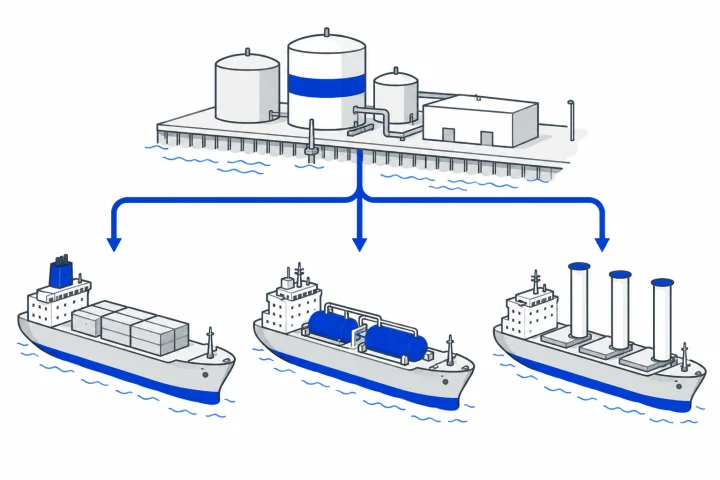
Shipping market models for the evaluation of new vessel propulsion technologies.
Models of shipping markets, covering freight rates, fleet supply and investment in vessels, used to assess how new propulsion technologies and fuels would be taken up and what they imply for cost, operations, infrastructure and regulation.
World models of transport and infrastructure operations.
Learned models that predict how ports, airports and transport networks evolve under alternative decisions, trained on detailed agent-based models and operational data, with assessment of their accuracy, computing cost and reliability for planning and operational use.
Supervision
Projects will be supervised by Prof Panagiotis Angeloudis, with input from our collaborators at the Vehicle Futures Hub, the Imperial Robotics Forum and other groups across Imperial.
How to apply
Before contacting us, read our admission criteria and, if you are seeking funding, our scholarship nomination expectations. The same process also applies if you already hold an external scholarship.
1. Contact us for an initial assessment
Important: use “TSL PhD 2027 – Your full name” as your email subject line. We receive many applications, and this helps us identify and track your enquiry.
Email Prof Panagiotis Angeloudis at p.angeloudis@imperial.ac.uk with:
- Your CV, of no more than two pages, including the supporting evidence listed below.
- A two-page personal statement, following College guidance.
- Your class rank or percentile, with cohort size and years covered, where available.
- Your intended funding route: seeking an Imperial scholarship, applying for or already holding external funding, or intending to self-fund.
Degree transcripts are not required for your initial enquiry, but will be requested later in the admissions or scholarship process.
2. Submit a formal application if invited
If invited, submit a formal application following Imperial’s research degree application guidance. If you are seeking scholarship funding, we will also assess your suitability for nomination.
Application guidance
How do you assess PhD applications?
We assess PhD applications against three criteria:
- Academic qualifications: Applicants must meet Imperial’s minimum entry requirements and any applicable departmental requirements, with qualifications in engineering, mathematics, computer science or a related discipline. We assess suitability on a case by case basis, considering academic results, research potential and relevant professional experience.
- English language proficiency: International applicants must meet Imperial’s English language requirements.
- Research fit: Your proposed research should align with the lab’s current research interests.
Do I need a first-class degree to apply?
Admission and scholarship selection are separate assessments. If you intend to self-fund or hold an external scholarship, not having a first-class degree does not automatically rule out consideration, provided you meet the applicable admission requirements.
For departmental and College scholarships, academic expectations are higher and competition is strong. Check the requirements of the particular scheme and our scholarship nomination guidance below.
Do you have any scholarships?
See these pages for available scholarships, eligibility and deadlines:
How are departmental scholarships awarded?
The Transport Systems & Logistics Laboratory nominates selected candidates to a Departmental Panel.
Academic achievement accounts for half the assessment score. The Panel also assesses experience, references, the institutions where you studied, the proposed supervision arrangements and whether the project involves collaboration across the department.
How competitive is my scholarship application?
The highest academic scores are given for a first-class undergraduate degree with a master’s distinction, or a first-class integrated master’s degree, supported by top-10% class rankings across multiple years and academic prizes. Equivalent qualifications are considered.
President’s PhD Scholarships are particularly competitive: Imperial offers 50 each year across the entire College. For a TSL nomination to this scheme, we normally expect candidates to reach the highest assessment bands for most applicant-related criteria:
- Sustained academic performance near the top of the cohort, with class rankings and prizes if available.
- Research or relevant professional experience with clear evidence of individual contributions.
- References giving specific examples of academic ability and capacity for independent research.
- A research proposal with a clear question, a credible approach and an identifiable contribution to the field.
See the President’s PhD Scholarship criteria for details.
What evidence should I include?
Include the following in your CV where applicable:
- Academic prizes and their selection criteria, where known.
- Research or professional experience, stating what you did.
- Research outputs, stating your contribution.
References supporting your academic ability and research potential will be requested as part of the formal application, if you are invited to apply.
Does a departmental scholarship cover all costs?
Not always. A standard Skempton award only partly funds overseas students. Check each award’s tuition fee coverage and living allowance.
How should I structure my personal statement?
Your personal statement should be a two-page document following the same structure as the President’s PhD Scholarship personal statement:
- First page: personal statement. Describe your motivations for applying to Imperial and the scholarship, and any other information you feel will enhance your application.
- Second page: research proposal. Set out your proposed research, and explain how it aligns with our Lab’s priorities.
Send this document with your initial enquiry to the lab. You may submit updated versions as part of your application and should you be nominated for a scholarship.
Postdoctoral opportunities
We do not currently have funding for postdoctoral positions. If you would like to apply for an external fellowship to work with the lab, please contact us.
Which external fellowships could support my research?
Relevant fellowship schemes include:
UROP and internships
Summer internships are open to Imperial College London undergraduates studying engineering, mathematics or computer science. We cannot currently accept applicants from other institutions.
See the UROP programme page for details. To register your interest, contact Prof Panagiotis Angeloudis by the beginning of the spring term.